

Onboarding users in Ollie
Ollie Order and OPS lack an effective and streamlined onboarding process for new users, resulting in significant challenges during the initial user experience. This leads to confusion, extended learning curves, and an increased likelihood of errors as users navigate through various features and functionalities. This will eventually result in user abandonment of the platform.
Project Details
Company
Next Glass
Project type
Contract
Project Date
2023
My role
Senior UX/UI Designer, collaborating with Dev, Product and Sales team.
The Challenge
Achieving a more cohesive experience between the two applications, Ollie Order and Ollie OPS. The goal is to enhance the user experience for those navigating both applications, ensuring a more seamless and enjoyable journey, by reducing the onboarding time and information duplicity.
Documentation of the current Customer Journey, and conducted interviews with Customer Success Agents, Support Specialists, Sales Experts, Accounting and other stakeholders.
What we know,
High Learning Curve: Ollie users take up to 2 months to be fully onboarded and functioning efficiently due to the complex nature of the software.
Reduced Productivity: Users struggle to understand the software's capabilities, leading to inefficiencies and slower task completion times, impacting overall productivity.
Increased Support Requests: The amount of user requests in Support and Customer success is increasing day to day
Dull Transitions: Ollie’s users cannot onboard themselves, they need to go through a long process after the sales rep has closed the opportunity. Customer Success needs to be involved for over 2 months before they are ready to go.
User Abandonment: Frustration arising from a lack of clear guidance prompts users to abandon the app, and go back to their former tools.
Underutilization of Features: Due to the amount of cognitive load in the onboarding process, Ollie’s users, tend to not utilize the app and wait for the trial period to expire.
Information Duplicity: Two distinct onboarding processes need to be implemented because the apps lack communication between them. Consequently, if users configure one of the applications with inventory, products, and warehouses, they will be required to duplicate the same information in the other app.

About Ollie
-
Ollie is a SaaS platform focused on brewery management solutions serving Canada and the United States. Ollie is affordable, easy to use and was built by brewers, for brewers. It’s an All-in-one solution offering streamlined software to manage brewery operations, order fulfillment, inventory, reporting, and e-commerce.
-
Web App: Ruby on rails
-
Brewery Owners/Managers: These individuals are responsible for the overall operation of the brewery. They use the app to monitor production, sales, inventory, and financial performance.
Brewmasters & Chemists: Brewmasters oversee the brewing process, recipe formulation, and quality control. They use the app to manage brewing schedules, ingredient inventory, and recipe adjustments.
Production Team: The production team includes brewers and cellar workers who handle day-to-day brewing tasks. They use the app to access brewing instructions, record brewing data, and monitor fermentation progress.
Sales and Marketing Team: This team is responsible for promoting and selling the brewery's products. They use the app to track sales, manage distribution, plan marketing campaigns, and analyze customer preferences.
Inventory & Delivery Managers: Inventory managers monitor raw materials like hops, malt, and yeast, as well as finished products. They use the app to track inventory levels, forecast demand, and place orders for supplies.
Accounting and Finance Team: This team handles financial aspects such as invoicing, expenses, and revenue tracking. They use the app to generate financial reports, track expenses, and manage budgets.
Taproom Managers: If the brewery has a taproom or tasting room, these managers use the app to manage customer orders, track sales, and monitor customer feedback.
Distributors: Distributors work with the brewery to distribute products to various retailers and venues. They use the app to place orders, track deliveries, and manage distribution logistics.
Customer feedback gathered through surveys and interviews
The Solution
This project comprised six sub-projects, each developed in distinct stages, all working towards the accomplishment of a key OKR for the year. Making Ollie Order and Ollie OPS work better together is the goal, reduce the Time to Value metric and avoid user abandonment. We want users to have an easier and more enjoyable time using both apps.
Design process
I initiated the design process by outlining the technical requirements and conducting interviews with individuals involved in the new user onboarding process. Additionally, roles and responsibilities were documented to ensure a consistent and efficient iteration of the user onboarding process.
Regular meetings were held with key stakeholders such as Customer Success, Implementation Managers, Customer Support, Sales, and Accounting teams, who provided valuable insights into user perspectives and time to value metrics.
Collaborating with the EVP, we established clear goals aligned with the overarching product strategy. Recognizing the need for platform stability, we introduced new technology to enhance the user onboarding experience. Concurrently, adjustments were made to the databases and information architecture for both applications.
I recommended a progressive development approach, emphasizing incremental improvements and continuous incorporation of feedback at each stage of the process.
Six - to - success
Single Sign-On
Allow the users to access multiple applications with just one set of credentials. This will increase the security by reducing the amount of passwords that the user needs to remember and security policies will be easier to enforce. A Keycloak implementation was used to centralize the user management through Admin access for support, accounting and success.
Status: Implemented
Integrated Billing
Streamline the billing process, saving time and ensuring accurate invoicing for clients. This Staxbill integration will also simplify the subscription lifecycle management, and allow customers to manage their own account and subscription details like, payment info, plan upgrades and adjustments. It will also integrate with Salesforce.
Status: Implemented
Launchpad
It is intended to provide a single entry point that allows user to quickly navigate to their desired destinations without the need to search or remember specific URL’s or paths. The launchpad will showcase new releases, updates or recommended functionalities. Also promotes discoverability for other apps and functions.
Status: Planned
Global items
This initiative aimed to create global information that fed both applications. When data is synchronized and shared between software applications, it reduces the risk of discrepancies, errors, or outdated information, users can gain a broader understanding of their business processes, customer behaviour, or operational performance.
Status: Planned
Global navigation
Consolidates different navigation elements into a unified and consistent interface. This simplifies the user experience and reduces cognitive load, as users don't have to search for navigation elements across different areas of the interface. This consistency enhances usability and establishes a clear visual hierarchy and organization within the interface.
Status: Implemented
You can read more about this project by clicking here
New Self-Onboarding
Effective onboarding empowers users to take control of the software and accomplish their goals, reducing the time invested in onboarding a customer to both applications and increasing adoption. A polished, intuitive, and user-friendly onboarding process, creates a positive first impression, conveys professionalism, and builds trust in the software and the brand.
Status: Planned
Outcomes
By redesigning the OnBoarding process “Time to Value” metric by the Customer Success Reps has decreased from 2 months to 3 weeks. With a focus on delivering value early in the onboarding journey, we observed improved retention rates.
Through user testing and feedback loops, we received positive responses regarding the revamped onboarding experience.
Users can now review and manage their billing information, as well as access their invoices and payment history within the platform.
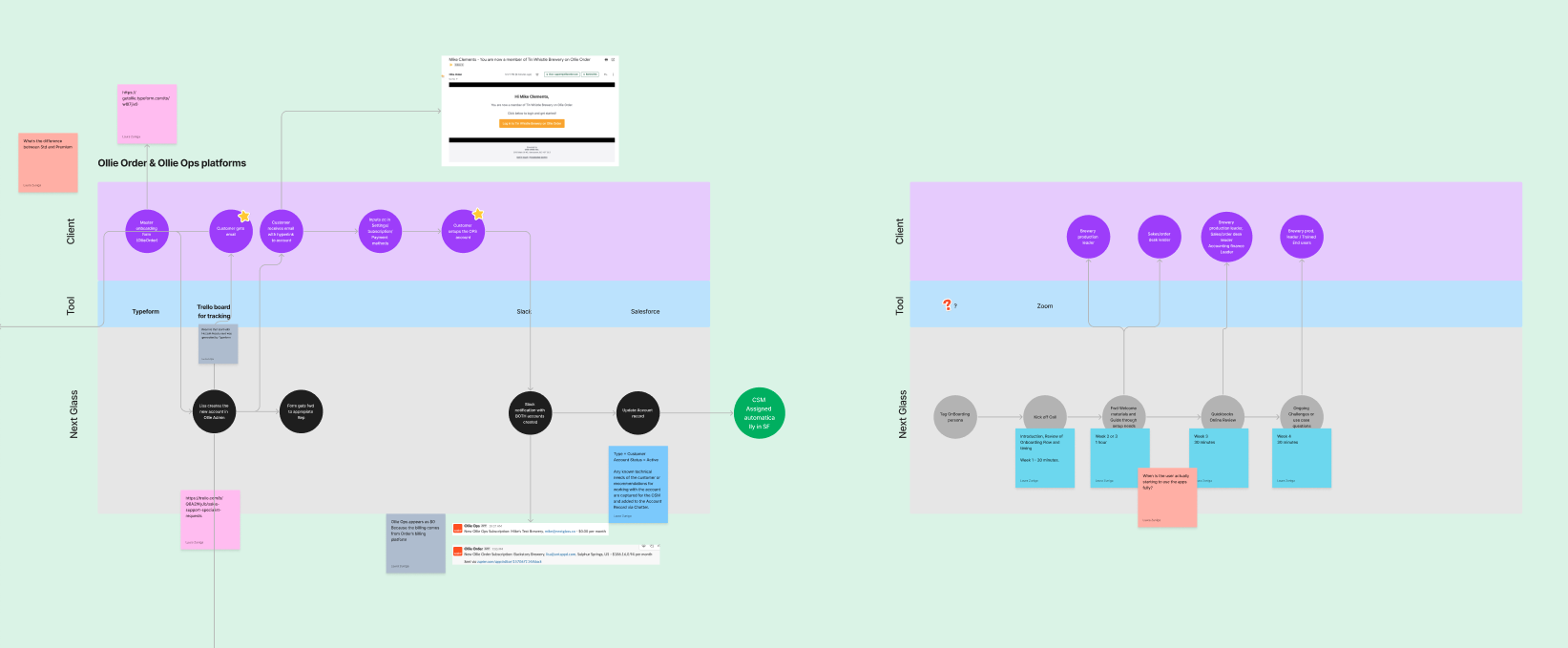
Customer success Step by Step
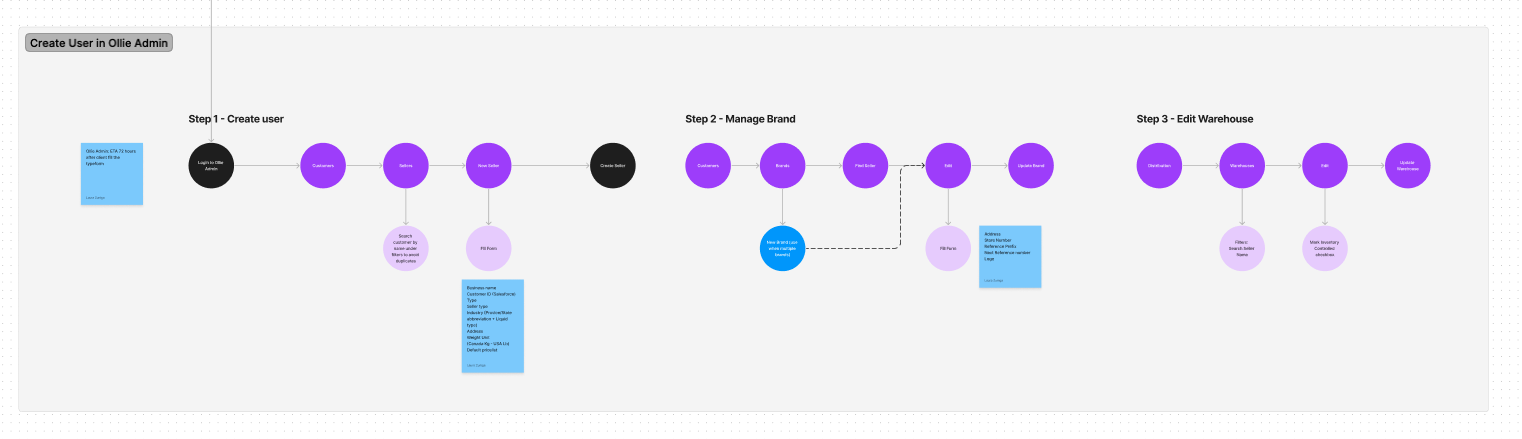
Admin User Creation process
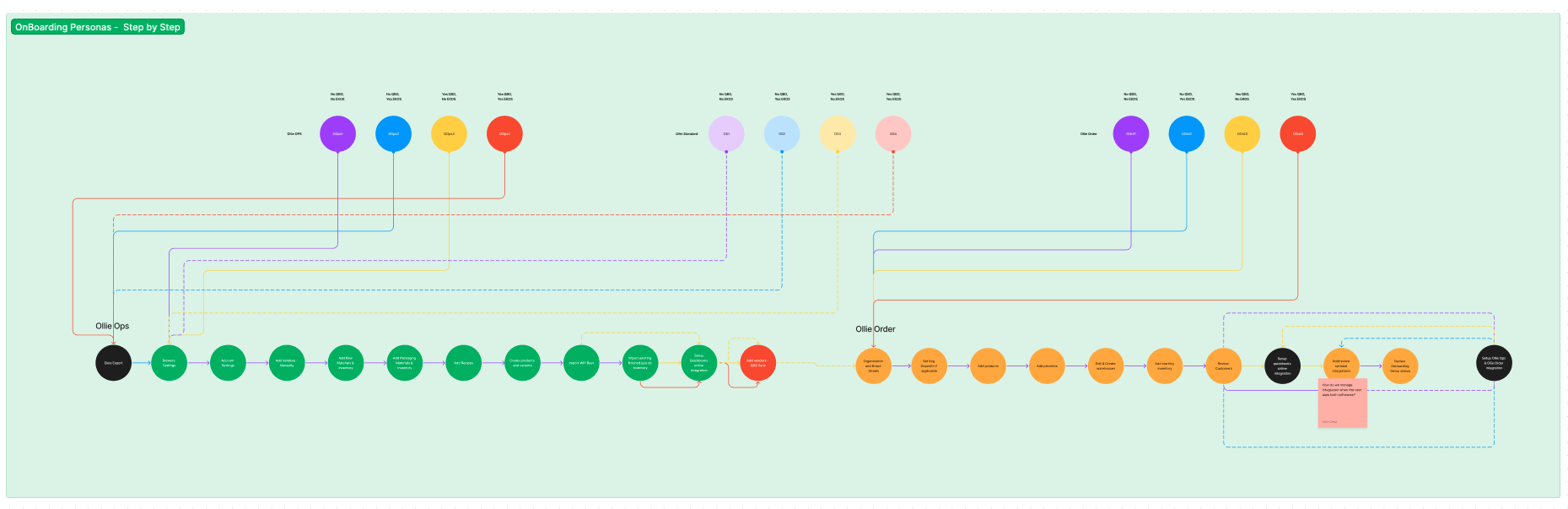
OnBoarding Steps based on Personas